Web Design Trends Long Island Businesses Should Follow in 2026
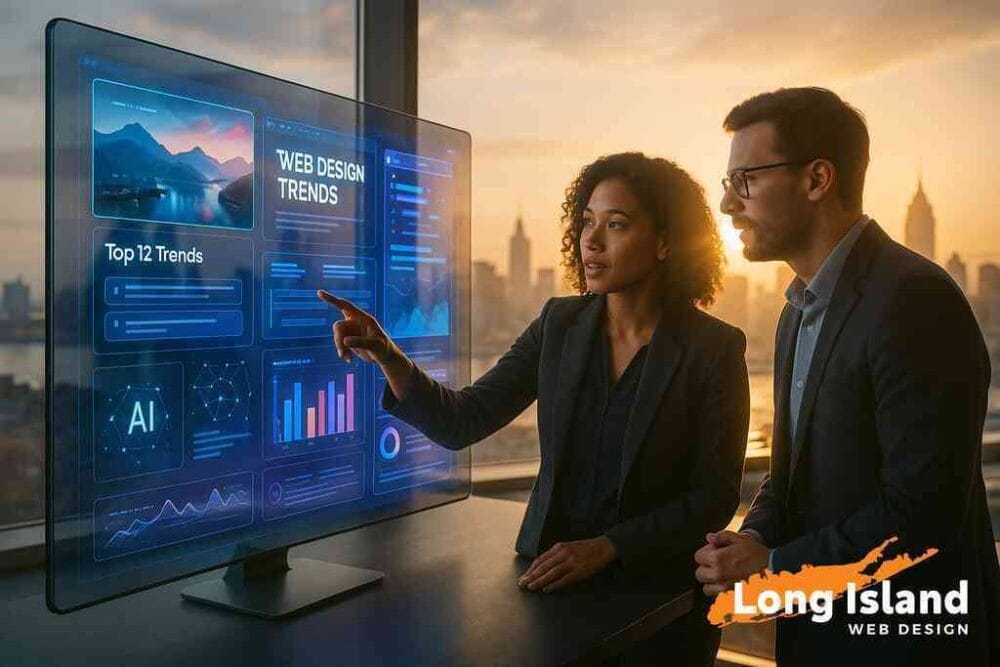
Web Design Trends Long Island Businesses Should Follow in 2026
Web design in 2026 is evolving faster than ever, and Long Island businesses that keep pace with these changes are positioning themselves for stronger digital performance. This overview covers the most important trends shaping how local companies build and manage their online presence.
Why Staying Current With Web Design Matters
A website is often the first impression a potential customer gets of your business. Outdated design signals outdated operations. Modern web design does more than look good — it improves user experience, supports search engine visibility, and builds trust with visitors.
For Long Island businesses competing in both local and regional markets, adopting forward-thinking design practices is a practical strategy, not just an aesthetic choice.
1. AI-Driven Personalization
Artificial intelligence is no longer a novelty in web design — it is becoming a standard feature. AI-powered websites analyze visitor behavior and surface content, products, or recommendations tailored to individual users.
This kind of personalization creates more relevant experiences, which tends to increase time on site and improve conversion rates. AI tools also assist with chatbots, automated customer support, and content optimization.
2. Voice Search Optimization
More people are using voice commands to search online, whether through smartphones or smart speakers. Websites optimized for voice search are structured around natural language queries — the way people actually speak, not just how they type.
Key tactics include:
- Using conversational, long-tail keyword phrases
- Adding structured data markup
- Prioritizing local search signals
For Long Island businesses with a local customer base, voice search optimization can meaningfully improve discoverability.
3. Mobile-First Design
Mobile traffic continues to dominate. A mobile-first approach means designing for smaller screens before scaling up to desktop — not the other way around. Fast load times, touch-friendly navigation, and clean layouts are non-negotiable in 2026.
4. Immersive Visual Experiences
Advances in browser technology allow for richer visual storytelling. Subtle animations, scroll-triggered effects, and high-quality video backgrounds can make a website feel dynamic without sacrificing performance. The key is balance — visuals should enhance the message, not slow down the page.
5. Minimalist and Clean Layouts
Simplicity remains a strong design principle. Clean layouts with clear hierarchy, generous white space, and focused calls to action reduce cognitive load and guide users toward the information they need. Clutter works against conversion.
6. Dark Mode and Adaptive Color Schemes
Dark mode is now a mainstream expectation for many users. Offering adaptive color schemes — designs that respond to a user's device settings — demonstrates attention to detail and improves accessibility and comfort during extended browsing.
7. Core Web Vitals and Performance Optimization
Google's Core Web Vitals remain a critical factor in search rankings. These metrics measure loading speed, visual stability, and interactivity. Businesses that invest in performance optimization are rewarded with better rankings and lower bounce rates.
8. Accessibility-First Design
Web accessibility is both an ethical standard and a legal consideration. Designing for users with disabilities — including proper contrast ratios, alt text, and keyboard navigation — expands your potential audience and reduces risk.
9. Micro-Interactions
Small, purposeful animations that respond to user actions — like a button changing color on hover or a subtle confirmation after form submission — make interfaces feel polished and intuitive. These micro-interactions improve usability without demanding attention.
10. Scroll-Based Storytelling
Long-form pages that reveal content as users scroll create an engaging narrative experience. This approach works especially well for service pages, case studies, and brand storytelling, keeping visitors engaged longer.
11. Integrated Social Proof
Reviews, testimonials, and real customer content embedded directly into the website design build credibility. For local businesses on Long Island, showcasing community trust is a powerful differentiator.
12. Sustainable and Ethical Web Design
Conscious consumers are paying attention to how brands operate online. Sustainable web design — including efficient code, reduced data transfer, and eco-friendly hosting — is an emerging trend that reflects broader brand values.
Putting These Trends Into Practice
Not every trend will apply equally to every business. The most effective approach is to evaluate which of these directions aligns with your audience, your goals, and your current website's weaknesses.
Long Island businesses that approach web design strategically — treating it as an ongoing investment rather than a one-time project — are far better positioned to attract and retain customers in 2026 and beyond.
This breakdown is intended to give local business owners a clear picture of where web design is heading and how to prioritize improvements that deliver real results.
Top 12 Web Design Trends for Long Island Businesses in 2026


Comments
Post a Comment